Hiw Do You Know if You Uave a Small Pelvis
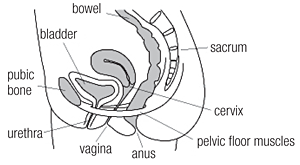
The pelvic floor is a group of muscles and ligaments that support the float, uterus (womb) and bowel.
The openings from these organs, the urethra from the bladder, the vagina from the uterus and the anus from the bowel laissez passer through the pelvic flooring. The pelvic floor muscles attach to your pubic bone at the front and the tail bone at the back and from the base of operations of your pelvis.
What exercise the pelvic flooring muscles practice?
When the pelvic floor is strong, it supports the pelvic organs to preclude bug such as:
- incontinence (the involuntary loss of urine or faeces)
- prolapse (lack of support) of the bladder, uterus and bowel.
The pelvic floor muscles also help you to control float and bowel office, such as allowing you to 'hold on' until an advisable time and place.
What causes pelvic flooring musculus weakness?
Some of the common causes of pelvic floor muscle weakness are:
- childbirth – specially post-obit delivery of a large infant or prolonged pushing during delivery
- being overweight
- constipation (excessive straining to empty your bowel)
- persistent heavy lifting
- excessive coughing – causing repetitive straining
- changes in hormonal levels at menopause
- growing older.
How practice I strengthen my pelvic floor muscles?
It is recommended that all women exercise their pelvic floor muscles every solar day throughout life, to preclude weakness or improve strength. Exercising weak muscles regularly, over a menses of time can strengthen them and make them work finer over again. Regular gentle exercise, such as walking can likewise assist to strengthen your pelvic floor muscles.
Exercise i
| Step i: | Sit, stand alpine, lie on your back with your knees bent and legs comfortably apart or kneel on your easily and knees. |
|---|---|
| Stride two: | Shut your eyes, imagine what muscles you would tighten to stop yourself from passing air current or to 'agree on' from passing urine. If you can't feel a distinct tightening of these muscles, ask for some help from a women's health physiotherapist. She will help you to go started. |
| Step three: | At present that you lot can experience your pelvic flooring muscles working, tighten them around your forepart passage, vagina and back passage as strongly every bit possible and hold for three to five seconds. By doing this, you should feel your pelvic flooring muscles 'lift upward' inside you and feel a definite 'permit become' as the muscles relax. If you can hold longer (but no more than a maximum of viii seconds), so exercise and then. Remember, the squeeze must stay strong and y'all should feel a definite 'let get'. Repeat up to 10 times or until you experience your pelvic floor muscles fatigue. Balance for a few seconds in between each squeeze. |
Steps one to three count as one exercise prepare. If yous can, practise three sets per day in different positions. Exercise your pelvic flooring exercises every twenty-four hours for the rest of your life.
Exercise 2 (quick squeeze for power)
Squeeze and lift your pelvic floor muscles as strongly and as quickly equally possible. Exercise not try to concur on to the contraction, but squeeze and let go. Residual for a few seconds in between each squeeze. Repeat this ten to twenty times or until you feel your pelvic floor muscles fatigue.
If you can, do this exercise prepare one to 3 times per twenty-four hour period.
During both exercises y'all should:
- feel your pelvic floor muscles 'elevator upwards' within you, rather than feel a downwardly movement
- relax your thighs and buttocks
- go on breathing normally
- stop exercising if your muscles fatigue.
Non sure where your pelvic floor is, or how to tone it once you've found it? Lookout Dr Marg Sherburn from the Women's as she demonstrates how to have intendance of those pelvic muscles.
What can I practise to prevent harm?
To forestall harm to your pelvic floor muscles, avoid:
- constipation and/or straining with a bowel motion
- persistent heavy lifting
- repetitive coughing and straining
- putting on too much weight.
Brand training part of your life by:
- tightening your pelvic floor muscles every time you cough, sneeze or lift
- doing some regular exercise, such equally walking
- progressing your exercises by doing them during the day in different positions e.g. standing, sitting or on your hands and knees.
For many women, it is important to follow a specific exercise plan tailored to their private needs. If yous are unsure of whether yous are exercising your pelvic flooring muscles correctly or you have urinary bug, you should make an appointment with a physiotherapist who specialise in women'southward health.
Disclaimer
The Women's does not accept any liability to any person for the data or advice (or utilize of such information or advice) which is provided on the Website or incorporated into it by reference. The Women's provide this information on the understanding that all persons accessing it have responsibility for assessing its relevance and accuracy. Women are encouraged to discuss their health needs with a health practitioner. If you have concerns about your health, you should seek advice from your health intendance provider or if you require urgent care y'all should go to the nearest Emergency Dept.
stevenshimbeyer1942.blogspot.com
Source: https://www.thewomens.org.au/health-information/pregnancy-and-birth/a-healthy-pregnancy/the-pelvic-floor

Post a Comment for "Hiw Do You Know if You Uave a Small Pelvis"